Written by: Anto of Icarus Games
My regular group and I recently softbooted our campaign, changing the system we were using from Pathfinder 2e back to D&D 5e. Everyone made new characters, though they were all part of the same adventuring guild as their previous characters, meaning we didn’t have to throw out the setting or a lot of the plot elements already introduced.
One of the things I was most excited about with the change was having more time to focus on battle maps and crafting exciting encounters for my group. The very first thing I did was head over to the Czepkeu map browser to look for an exciting first adventure location.
I settled on the Gem Hunter variant of the Minotaur Labyrinth, which was perfect! It was a large map with plenty of tight, claustrophobic tunnels and little passageways for the player characters to find themselves face-to-face with different monsters.
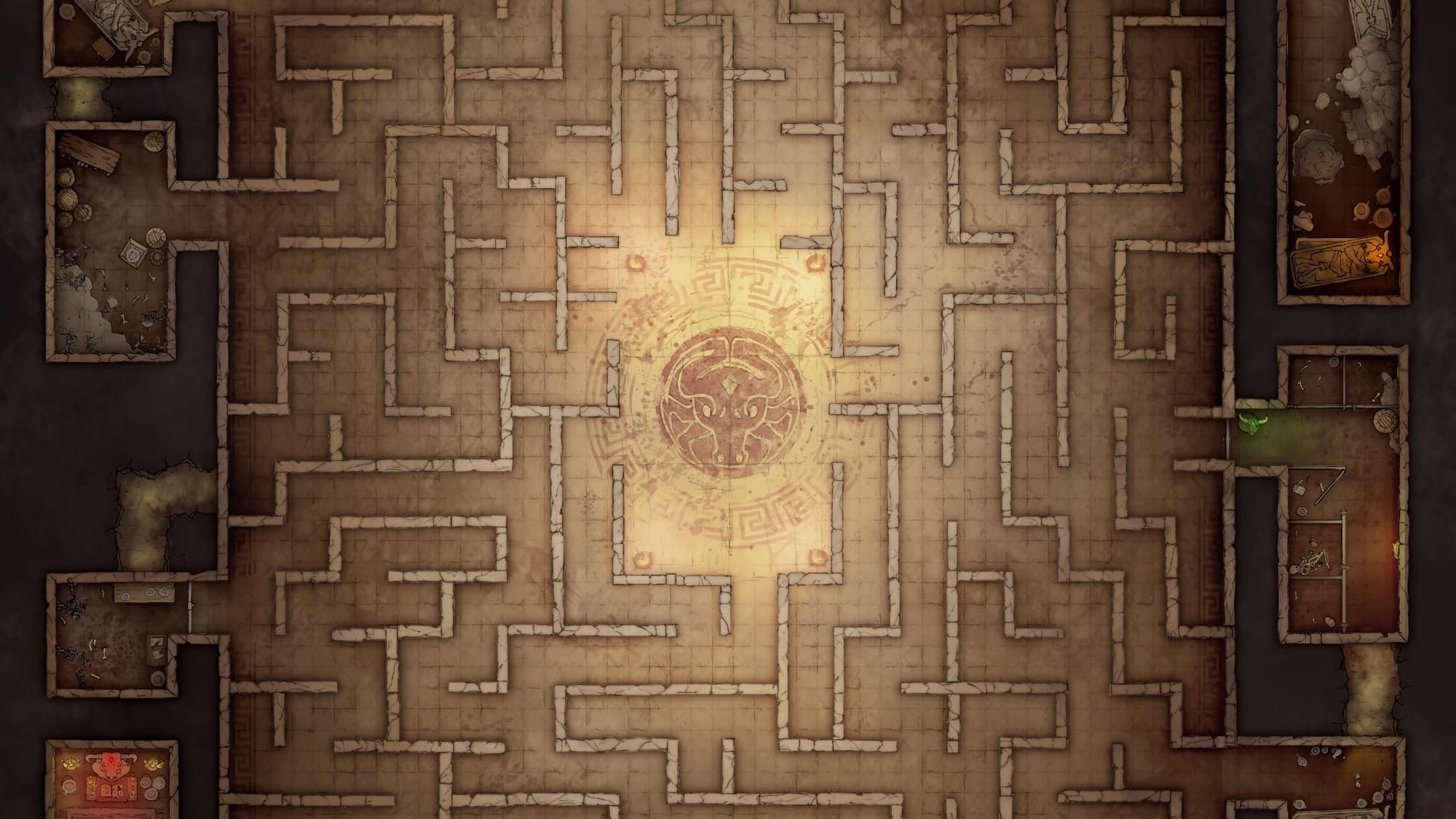
That was months ago, and my players still haven’t reached the labyrinth.
I run an open-world sandbox campaign where I tell my players they have the freedom to go anywhere they want and do whatever interests them. Usually, they are happy to follow the story breadcrumbs I lay down for them, but of course, after spending an afternoon prepping an exciting, pulp adventure, they would end up wandering the world like stray cats.
So, instead of running them through a carefully crafted adventure, I’ve spent the last two months like Gromit laying tracks in front of the train, and there’s no way I’d have been able to do that as successfully without Czepeku’s map browser.
Making Order From Chaos
To be able to get the game moving in front of wandering players without them realising I’ve used a few key tricks.
The most important thing is at the end of each session I’ve been asking each of them what their goals or desires are for the next session. It’s a very simple thing, but when the entire game hinges on the players’ agency, you need to know what they are thinking of doing.
After a session, I will note down what each player wants to do during the next week and look for ways to connect at least two players' desires. From there, I head to the map browser and look for maps that would fit the bill.
Sometimes that job is easy and the players will say they want to check out the local arena, so I’ll load up the Colosseum of Challenges and think of some NPCs and opponents to populate it. Other times things are a little more vague.
At the end of one of our sessions, one of the players said they wanted to go into the sewers during the next session and find something to fight. While I was looking at the Sewer Tunnels map, I was inspired by the rainbow variant, and introduced an aberration monster that was leaching contamination into the water and causing mutations throughout the city. That plotline lasted for multiple sessions and was entirely inspired by a minor detail on one of the map variants.
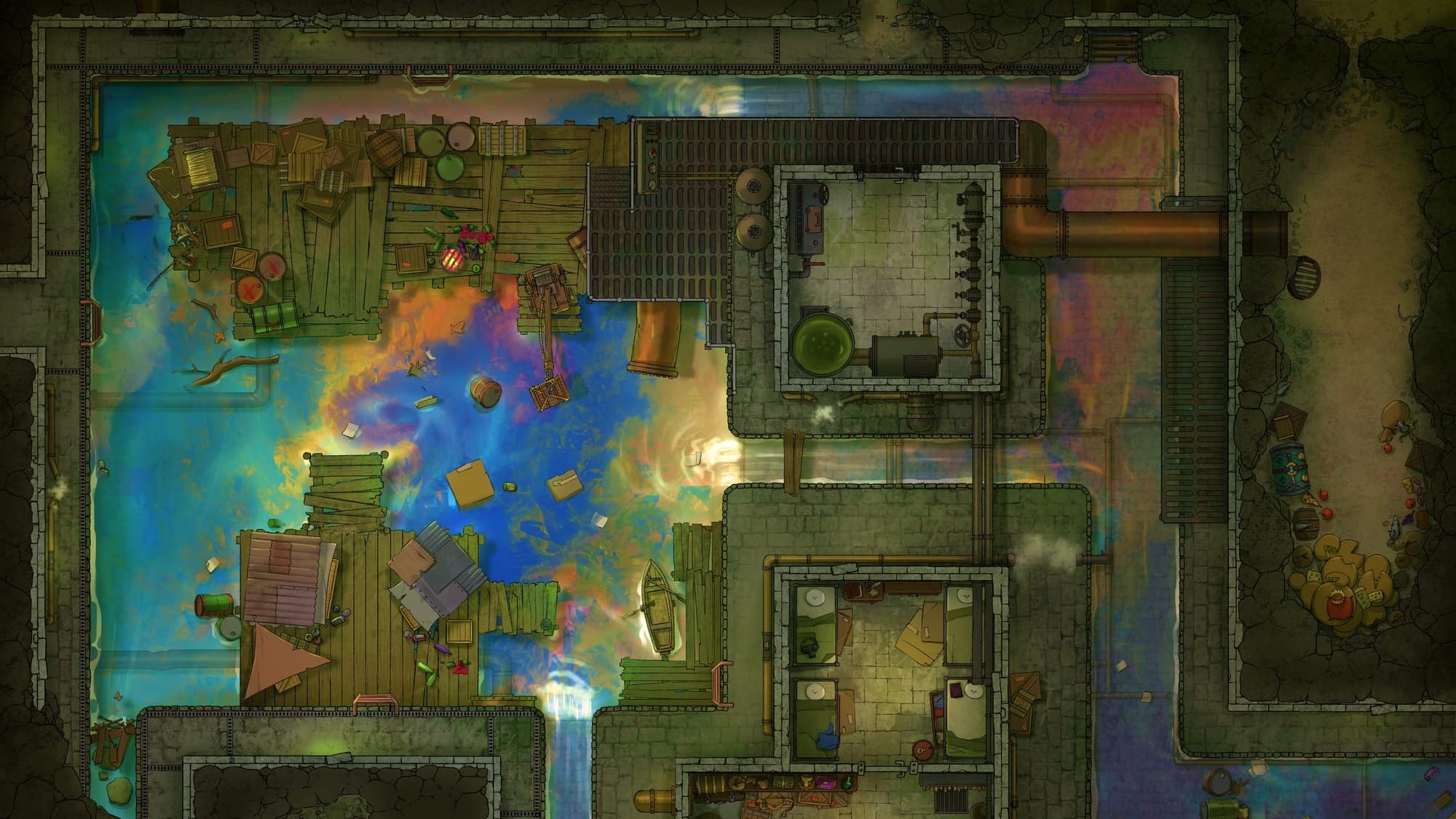
When you’re running a full sandbox game, finding inspiration for plotlines can be one of the most difficult elements as a game master, but starting with the encounter map is a really good way to get the creative juices flowing and to build in details to the adventure that is reflected in the map.
My players are still nowhere near heading to the Minotaur Labyrinth for that initial adventure, though it is still their goal. They are currently planning to heist some magic items from the city’s bank and have been pouring over the Wizard’s Bank map, making notes, and planning their entry and escape routes.
For more great guides and tutorials, follow Anto’s YouTube channel, Icarus Games. And check out all of our battlemaps and scenes to find your own session ideas.